
Multiplayer is the same game against nine human kingdoms on a shorter clock. Few rules change, and each one changes what a good kingdom looks like.
How Royal Royale works
Multiplayer opens after three games and is called Royal Royale. Nine players each build a kingdom and the battles are asynchronous: your army fights another player's kingdom as they built it, with nobody waiting on anybody. The kingdom that stands longest wins, and a finish in the top 3 is what each king's multiplayer achievement asks for.
You can only pick kings you have already unlocked in single player. Leaving in the middle of a game counts as last place, so a bad run is still worth finishing. Results feed a ladder of nine ranks that starts at Peasant, with Duke and Prince further up, and the ladder resets every season.
Peace does not last here. When the king you are at war with is knocked out, the diplomat makes you declare war on another one.
PC and mobile share it. The mobile version plays on the same multiplayer ladder as everyone else, so the kingdoms you meet can come from any platform.
What changes from a solo run
Four numbers are different, and the last row matters most. A solo run can keep scaling in endless mode after year 33. A multiplayer game cannot, so anything that only pays off after year 33 is a wasted pick here.
Five lives instead of three is a budget you can spend. The shorter stalemate timer punishes kingdoms that only stall: after 180 seconds of battle, 2% damage is dealt every second and life steal stops healing.
The decrees change too. Each season multiplayer draws its own decree pool: 18 universal decrees, 6 of the Jack of Rainbows' and 6 for each king. The pool is listed in the bottom left corner of the lobby, on the same screen as the season's Rainbow cards. Check it before planning a build around one decree, because a build that needs a decree outside the pool cannot be finished that season.
| Rule | Single player | Multiplayer |
|---|---|---|
| Lives | 3 | 5 |
| Stalemate starts after | 300 seconds | 180 seconds |
| Cards you can hold | 27 | 27 |
| After year 33 | Endless mode | The game is over |
Perks that only exist here
Multiplayer has its own set of universal perks, and some single player perks are switched off. Hardy adds 20% HP to your base. Expander adds 2 perk slots to one row, and Banisher lets you pick a king to remove from your next game.
The other four are about where a perk sits in the grid. Authoritarian makes the top left perk count three times. Moderate makes every universal perk count twice. Leftist applies the perk to its left once more, and Verticalist does the same for the perks above and below it. Decide which perk you want multiplied before you fill the grid, because Authoritarian only ever looks at one slot.
Vigilant is worth a look for a slow king. It starts you with 2 extra years of protection, which is two more years of building before anyone can hurt you.
The Hourglass problem
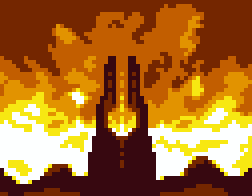
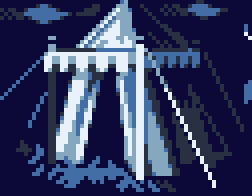
The Hourglass is an extremely slow tower that releases one massive explosion when it is fully charged. Slow is its only drawback, and multiplayer kingdoms are built to remove it. A Beacon adds 2% attack speed to the plots beside it every year. A Camp adds 2% to every stat of its neighbours each time a card lands on an empty plot. Put four of those around one Hourglass and by the late years the explosion arrives before your troops have crossed the field.
It is a King of Time card, but it does not stay with him. Stone and Greed players buy or loot one and build the same ring around it, so expect to see it from any colour. Most towers are capped at 49 hits a second, the Hourglass at 10, and a finished Hourglass sits at its cap with its damage still growing.

Beating an Hourglass
Raw HP is not the answer. Steel Coat is. Each stack cancels one more hit the unit takes in every battle, up to 49 stacks, and an Hourglass deals its damage in a few enormous hits instead of many small ones. A troop plot with enough Steel Coat walks through the explosions that delete everything else.
Stacks come from the card itself, from the Armory decree, which gives every troop 3 at once, and from a Library next to the plot, which has a 50% chance each year to copy one of its enchantments. Players who put all their cards into stats and none into Steel Coat lose to the same Hourglass every game.
The second answer is speed. An Hourglass that has not reached full attack speed can still be out-raced, so look at the support buildings around it before you decide how to fight that player.
Other builds you will meet
Boars with a ranged rider. A Boar gives the troop riding it +1% stats for each HP the Boar has, so every HP buff on the Boar is a damage buff on the Ballista or Elf sitting on it. Feast doubles troop HP in one pick. What holds against it is wall HP: a Stone kingdom built around the Stronghold and Wallmakers, whose walls gain 10% HP every year.
Warper swarms. A Portal that reaches max level sends its kingdom 2 years back in time, and going back past the blessing means the blessing happens again. With Baby Boom that doubles the Warpers on each loop. The summons inherit only half a Warper's stats, so area damage clears them: Combustion on your carry, or a Converter.
Defender walls. Defenders do not attack and reflect all the damage they take, and Reinforce heals them by 2% a second. A Converter is the clean answer because it turns them into rats that fight for you. The wall also runs into the 180 second timer.
Dwarves walking past Camps, which is covered in the Dwarves guide, and early Blood rushes around years 7 to 10. Blood and Stone have the strongest openings and both fade if they do not find a late plan.


Losing a life on purpose
The King of Stone's Impervious perk gives 2 Wallmaker cards every time you lose a life. With five lives to spend, giving up an early battle turns a life into walls while a life is still cheap. Years 4 to 6 are the window for it. Walls placed that early have the most years of 10% growth ahead of them.
It only works as the start of a plan. Stone's own cards carry the first years and little after, so the lives buy time to shop from other kings: an Hourglass, Camps to speed it up and a Vault to pay for it are the usual list. The Obelisk, a Rainbow tower whose damage rises by 900% whenever you lose a life, rewards the same trade.
For any king without Impervious a conceded battle is a life gone for nothing. Late in a game a single life is the gap between two placings, so stop spending them once the walls are down.
Mistakes to avoid
Building for endless. The game stops at year 33, and a kingdom that would have peaked at year 40 finishes in the middle of the table.
Stacking one stat. Damage with no Steel Coat dies to the first explosion, and HP with no damage runs out the stalemate timer.
Quitting a lost game. It is recorded as ninth place, where playing it out often is not.
Copying a solo build card for card. Solo builds are tuned against scripted armies that grow every year. Here the enemy is a kingdom built to end the fight in its first second.